Sponsored article
The Role of Entrance Mats in Enhancing User Comfort
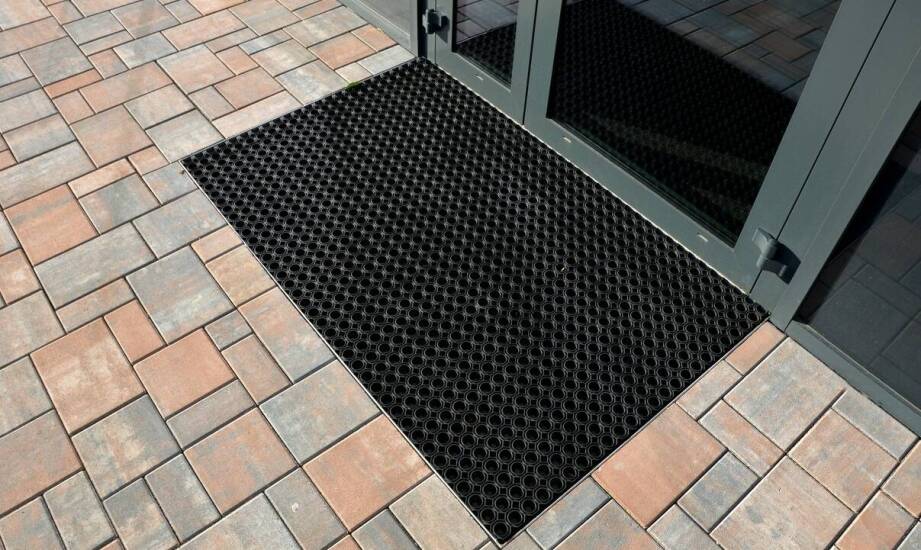
User comfort begins earlier than many investors assume—not at the reception, not in the lobby, and not at the first contact with the staff. It starts exactly where the sidewalk ends. What lies beneath one's feet in the entrance zone has a real impact on safety, ease of movement, aesthetic perception, and the overall impression of being in a given facility. Therefore, entrance mats are not just an accessory or a technical detail, but an element that works for the user from the first second. Well-designed solutions do their job quietly, but their absence is immediately felt—especially when comfort ceases to be a given.
Read more: Comparison of ready-made bar mats with custom PVC bar mats
Why do entrance mats genuinely enhance user comfort right from the threshold?
Entrance mats are the first infrastructure element a user encounters, so their role in building comfort is both immediate and long-term. Properly designed systems effectively retain moisture, dust, and debris, limiting their migration indoors and stabilizing movement conditions. Slip-resistant entrance mats, due to their traction properties, are crucial as they minimize the risk of slipping on wet surfaces, particularly in areas with high traffic levels. The result is a sense of security, smooth movement, and greater physical comfort, which the user feels directly, often without realizing the source of the improvement. In practice, this translates to a better experience for customers, employees, and guests, as well as more stable operational conditions for the facility.
Read more: The Role of Technology in Deburring for Reducing Production Waste
How do quality craftsmanship and technology affect everyday user experiences?
The comfort of users is directly dependent on the quality of materials, construction, and the adaptation of mats to specific usage environments. The solutions offered by Unimat Factory rely on modular entrance systems that allow for precise customization of the cleanliness zone to the conditions of the facility, type of traffic, and intensity of use. As a result, mats not only effectively fulfill their protective function but also maintain stability, aesthetics, and functionality over a long period. High resistance to abrasion, moisture control, and ergonomic use ensures that comfort is not a temporary effect but a constant feature of the space, visible in both commercial and public utility facilities.
How do entrance mats shape first impressions and the long-term perception of space?
Entrance mats serve not only a technical but also an image function, influencing how a user perceives the space from the first contact. A clean, dry, and stable entrance zone creates a sense of order, professionalism, and attention to detail, which directly translates to psychological comfort. Additionally, protecting floors from accelerated wear means maintaining the aesthetics of interiors at a high level, without the need for frequent renovations or repairs. Eventually, entrance mats become an element supporting the ergonomics, safety, and visual coherence of the facility, thus serving as a real tool for improving the quality of space usage every day.
Comfort that starts at the entrance and works every day
Entrance mats fulfill the function of the first, crucial layer of user comfort, influencing safety, cleanliness, and space perception. Already at the entrance stage, they limit moisture and debris, stabilize movement conditions, and reduce slip risks, directly translating into a sense of comfort and control. In the long term, they protect floors, support the aesthetics of interiors, and reduce the operational costs of the facility. As a system element, not an accessory, entrance mats become a solution that consistently builds positive user experiences and enhances the professional character of every space.
You might be interested
Conical chasuble and Other Styles of Liturgical Vestments: A Comparison

Comparison of ready-made bar mats with custom PVC bar mats
The Role of Technology in Deburring for Reducing Production Waste